Why a Multilingual Website Is Essential in 2026

We are in an increasingly interconnected world. In March 2026, the internet serves as the primary gateway for businesses to reach customers, partners and talent across borders. With approximately 6. billion people online, it has never been easier to work with people from different countries.

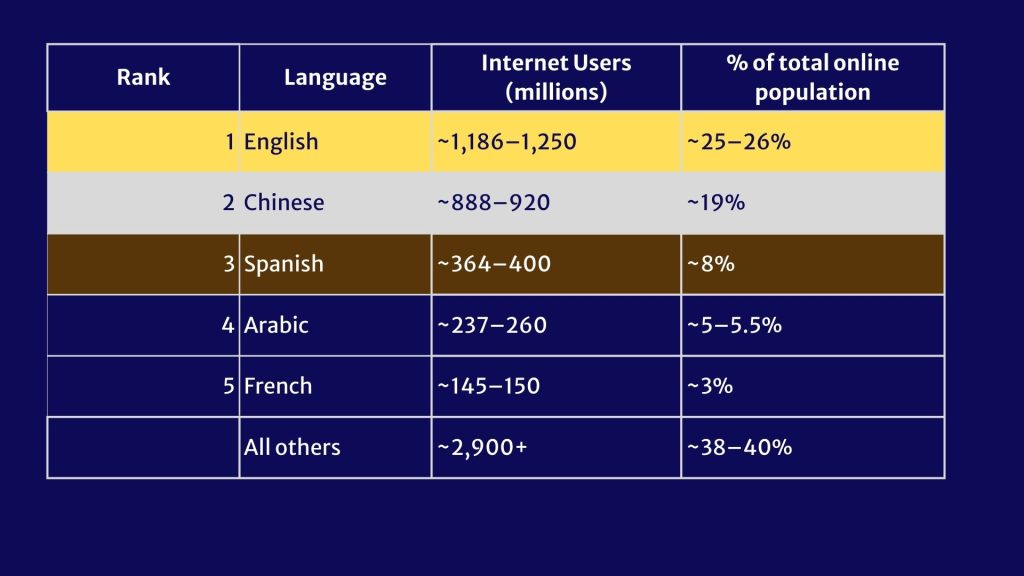
While English is still dominant , it accounts for only about 25–26% of internet users. This linguistic diversity is a critical reality: a monolingual website limits a business’s potential in the global market. In 2026, multilingual websites are no longer just about increasing visibility They are about showing cultural and business awareness tailored to different markets.

Here are 5 reasons why a multilingual website is essential in 2026

1. Reaching a Global Audience

The global internet user base is extremely diverse, with non-English speakers forming the clear majority.

By translating websites into these languages, companies can access new demographics, especially in emerging markets like Asia, Latin America and Africa, where internet penetration continues to grow rapidly.

Examples you can see right now:

  • Brazil: the first economy in Latin America where around 5% of the population have some knowledge of English and only 1% are fluent. A leader in agriculture, energy, fintech and e-commerce.
  • Arabic-speaking markets (Saudi Arabia, UAE, Egypt):  explosive digital growth in tourism, luxury, construction and tech services and investment in their soft power strategy like the vision 2030. 
  • Spanish-speaking countries: one of the fastest-growing e-commerce regions worldwide. Since Milei’s election Argentina has been getting more influential on the global stage and the region’s population is young and has strong cultural links with European nations. 

Localizing content shows your company is culturally aware of these markets.

2. Enhancing User Experience and Engagement

Users prefer consuming content in their native language and this directly impacts engagement metrics.

Well-established figures that remain true in 2026:

  • 76% of online consumers prefer buying products with information in their own language (CSA Research)
  • Bounce rates drop significantly when navigation feels intuitive and culturally relevant
  • Session durations often increase noticeably


In markets like Brazil, being the first to offer clear Portuguese content can make a huge difference. In 2026, with AI-driven personalization advancing, multilingual features help users feel valued and foster loyalty, especially important in sectors like e-commerce, healthcare and professional services.

Today there are many plugins that can automatically translate parts of your website  but the best results still come from combining smart AI with human review.

3. Boosting SEO and Visibility

Search engines like Google prioritise localised content. They serve results based on user language and location.

Key advantages in 2026:

  • Using hreflang tags, alternative URLs and region-specific keywords improves rankings in non-English searches
  • Country-code domains (.fr, .es, .br, .com.ar, .mx, .sa) give you an advantage in local markets. For example the number of registered .fr domains, for example, keeps growing compared to .com in France
  • In many cities such as London, New York or Singapore llarge expat communities search for services in their own language: medical professionals, language teachers, recruitment, marketing agencies, schools, clinics, supermarkets…

Over 30% of U.S. online searches are conducted bilingually in Spanish and English — similar patterns exist in many other countries. Multilingual SEO is now one of the top localisation trends.

4. Driving Revenue and Business Growth

The financial incentives are clear: multilingual sites correlate with revenue growth.

Real-world outcomes businesses see in 2026:

  • E-commerce platforms often report 20–30% sales increases in the first year after launching localised versions
  • 65% of users are more likely to buy when product details are in their language

For small and medium businesses, this levels the playing field — allowing entry into international markets without physical expansion. In 2026, as cross-border e-commerce surges, multilingual strategies are key to capturing global market share.

5. Building Trust and Brand Reputation

A multilingual website signals respect for cultural diversity and enhances brand perception.

Consumers trust global brands more when they see localised content ( it demonstrates commitment to inclusivity). Your multilingual website doesn’t have to be a plain translation of your English site: you can adapt your copywriting to fit your target audience with geographical or cultural elements.

Even governments understand this:

  • Most UK public-sector websites offer a Welsh version
  • The HSE (Britain’s national regulator for workplace health and safety) provides content in multiple languages such as Bengali, Polish and Romanian
  • US government websites all provide a translated version in Spanish

Conclusion

In 2026, a multilingual website is indispensable for bridging linguistic divides, boosting engagement, and fuelling growth. With the majority of internet users being non-English speakers, localisation is no longer optional, it must be part of your growth strategy. By speaking your visitors’ languages and building cultural bridges through your website, you create meaningful connections and mutual opportunities. A multilingual website can help British businesses increase visibility and expand successfully into promising emerging markets.